The Jahit Sıtkı Tarancı Museum—the poet’s house in the black stone of Diyarbakır
In the historic Sur district of Diyarbakır, just a few steps from the Grand Mosque, stands a two-story basalt house built in 1733. Within its walls, in 1910, Jahit Sıtkı Tarancı was born—one of the most subtle lyricists of 20th-century Turkish poetry. Today, this place is known as the Jahit Sıtkı Tarancı Museum. The building has been open to visitors since 1973 and houses 152 personal items belonging to the poet and his family. The Jahit Sıtkı Tarancı Museum is not just a house-museum: it is a model of a traditional 18th-century Diyarbakır dwelling, where four wings surrounding a square courtyard corresponded to the four seasons, and the architecture itself tells the story of the rhythm of life in this city over the centuries.
History and Origins of the Cahit Sıtkı Tarancı Museum
Cahit Sıtkı Tarancı was born on October 2, 1910, in Diyarbakır, in the largest room of the summer section of this house—the so-called başoda (“main room”). The poet spent his childhood and youth here before moving to Istanbul. He lived to be 46 and died in 1956. His poetry was distinguished by a special intimacy and subtle lyricism; the collections of poems published during his lifetime and posthumously constitute an important chapter in the history of modern Turkish literature.
The building itself was constructed in 1733—meaning that by the time Tarancı was born, it was already nearly two centuries old. The building material is basalt, from which the entire historic Diyarbakır is constructed. This black volcanic stone gives the entire old city a distinctive, austere appearance unlike any other Turkish city.
After the poet’s death, the house stood empty and gradually fell into disrepair. In 1973, the Turkish Ministry of Culture acquired it. Following restoration work, on October 29, 1973—the 50th anniversary of the proclamation of the Turkish Republic—the house was opened as a memorial museum. The choice of date was symbolic: the Republic’s birthday became the museum’s birthday as well.
In 2003, the building underwent another restoration. The next major restoration and renovation of the exhibition took place in 2011–2012: work began on May 1, 2011, and was completed on August 1, 2012. The renovated museum opened on May 18, 2012—International Museum Day. The museum houses 152 exhibits: the poet’s personal belongings, family household items, documents, and photographs.
Architecture and What to See
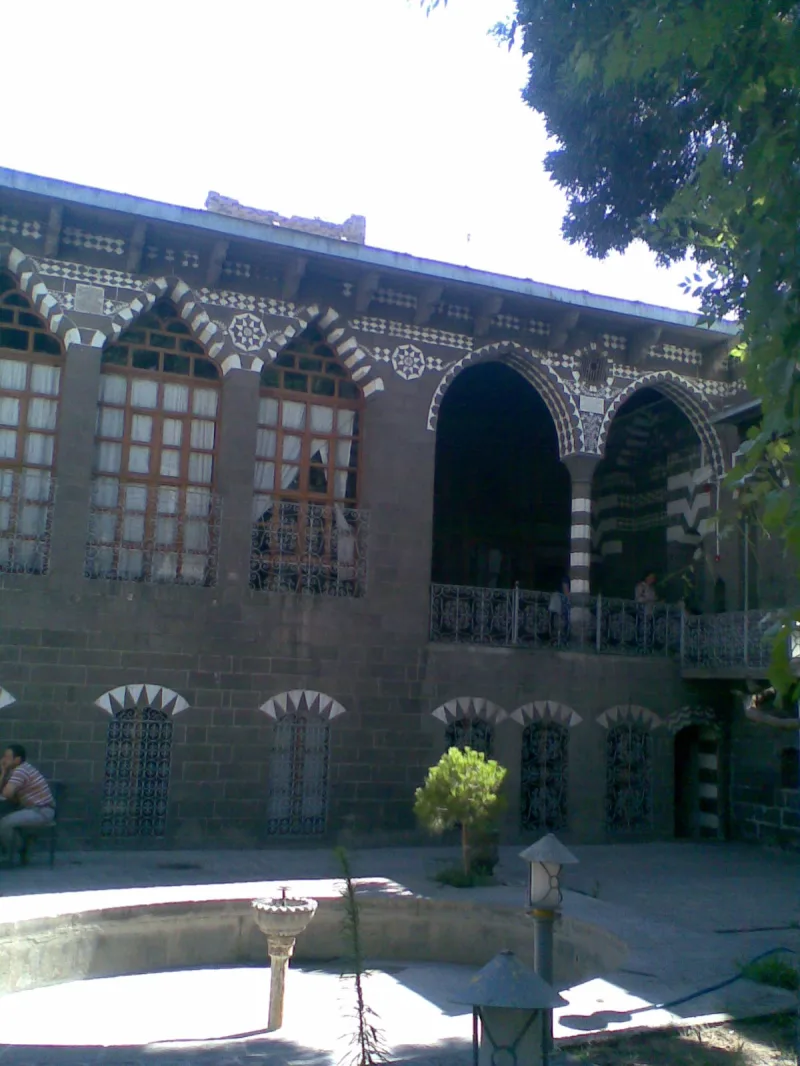
The museum building itself is a monument—an example of a traditional 18th-century Diyarbakır residential house. Externally, it is unassuming: dark basalt walls, a courtyard closed off from the street, and minimal decoration on the facade. But once you step into the courtyard, a different spatial logic unfolds.
Architecture of the Four Seasons
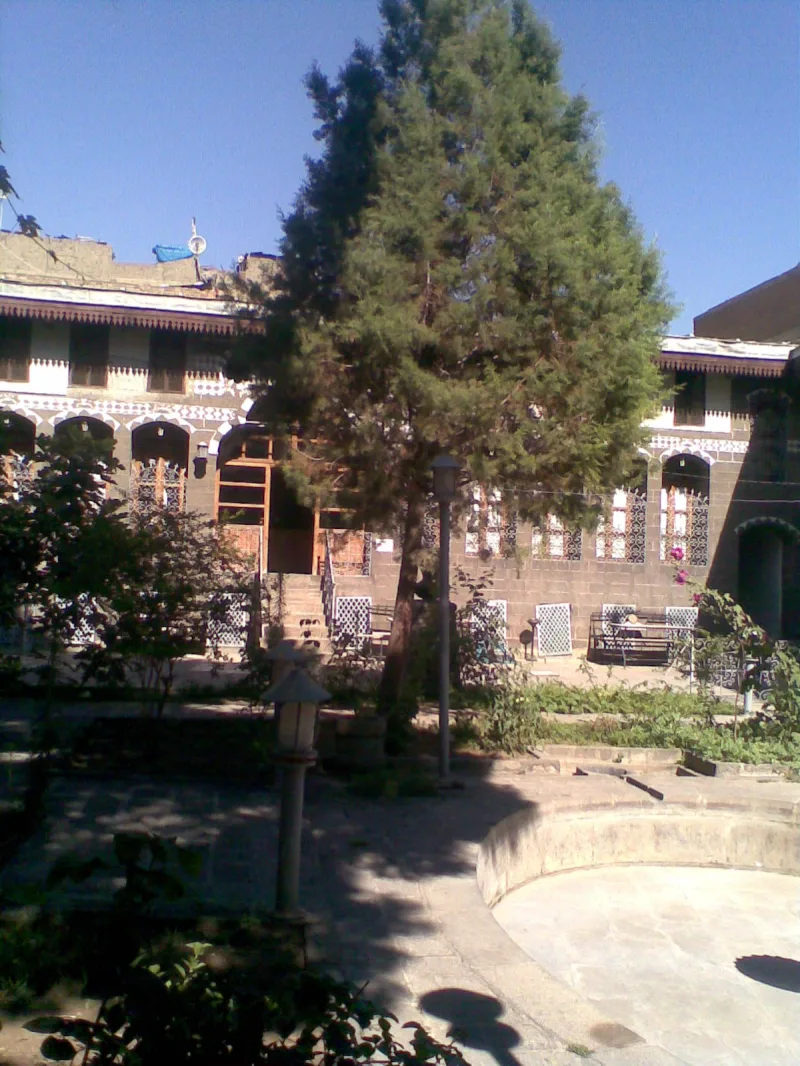
The building consists of four symmetrical wings arranged around a square courtyard. Each wing corresponded to a specific season: the north wing was used in summer, the east wing in spring, the south wing in winter, and the west wing in autumn. This is not merely a poetic metaphor: the orientation of the rooms relative to the sun was carefully designed to ensure a comfortable microclimate throughout the year. In traditional Turkish architecture, this system of organizing living space is called a “four-season house” (dört mevsimlik ev) and is a striking example of climate-responsive architecture long before the concept was coined.
Başoda — the main room
In the summer (northern) section on the second floor is the başoda—the main room of the house. In front of it is an iwan with a double arch—an open gallery traditional to Anatolian residential architecture. It was in the başoda that the poet was born—this is the most spacious and ceremonial room in the building, which in traditional houses was intended for receiving guests and important family events.
Kitchen, hammam, and 14 rooms
The kitchen is located in the northeast corner, designed in the form of an iwan. In the southwest corner is the hammam (bathhouse). In total, the building has 14 rooms of various sizes, a pantry, and a bathroom. The two-story structure of the summer section is the most representative part of the house: it is here that most of the exhibits are concentrated and the interiors of the era have been recreated.
Exhibition: The Poet’s Belongings
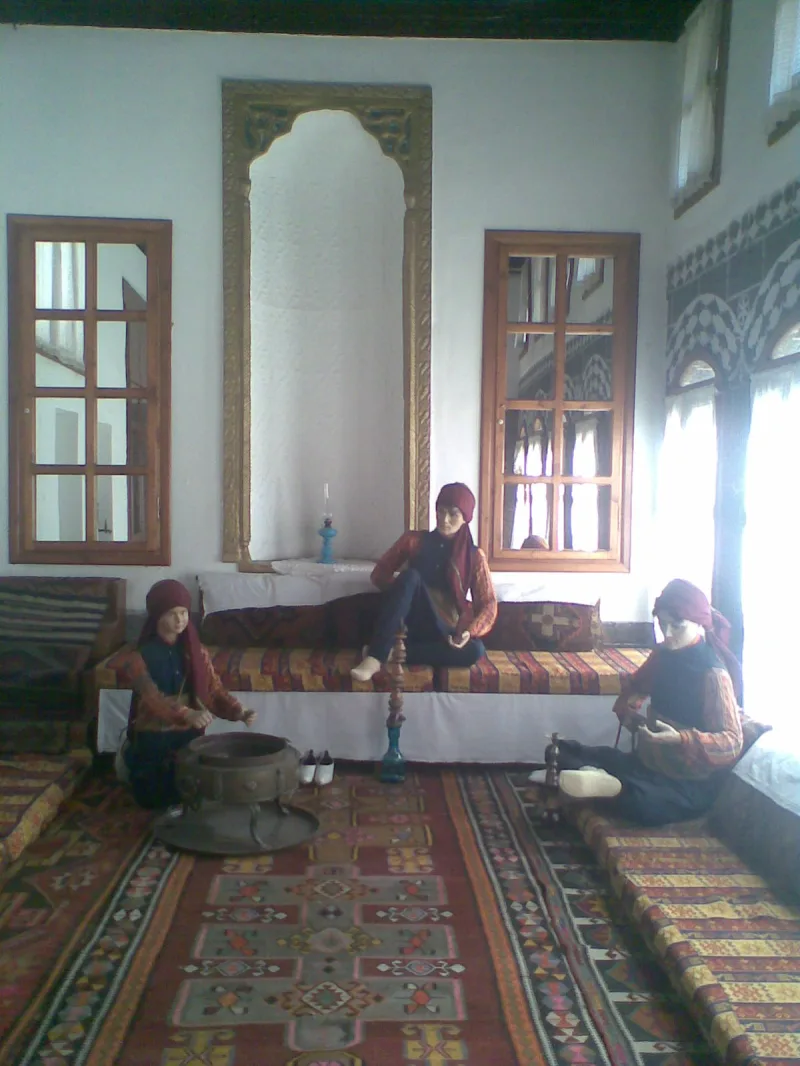
The 152 items in the display cases and on the shelves are not monumental relics, but intimate testimonies to life: a writing desk, books, glasses, manuscripts, family photographs, clothing, and personal letters. The museum deliberately recreates the atmosphere of a lived-in home, rather than an official memorial. Visitors feel like guests, not tourists standing in front of a display case.
Interesting facts and legends
- Cahit Sıtkı Tarancı lived only 46 years (1910–1956). His poem “Otuz Beş Yaş” (“Thirty-Five Years”), written in 1946, is considered one of the most famous works of modern Turkish poetry on age and time.
- The museum opened on October 29, 1973—exactly on the 50th anniversary of the Republic of Turkey. This coincidence was intentional: Tarancı’s literary legacy was viewed as part of the cultural foundation of the new country.
- The building was constructed in 1733—meaning it is nearly twice as old as the poet himself and more than twice as old as the Republic of Turkey. For three centuries, its basalt walls have preserved layers of history that extend far beyond the fate of a single individual.
- The traditional “four seasons” layout, with separate wings for winter, spring, summer, and fall, reflects a climate-conscious approach to housing characteristic of Anatolian cities with sharp seasonal temperature fluctuations.
- Near the Tarancı Museum in Diyarbakır is another similar house-museum—the Ziya Gökalp Museum, dedicated to the founder of Turkish nationalism. Both buildings are made of basalt, both date from the 18th century, and both are located in the Sur district.
How to get there
The museum is located in the historic Sur district of Diyarbakır, near the Grand Mosque (Ulu Cami). Diyarbakır Airport (DIY) receives direct flights from Istanbul, Ankara, and Izmir. From the airport to the city center, it’s about a 15–20-minute taxi ride or a short bus ride. The Sur district is accessible on foot from the city center; parking near the basalt gates is difficult—it’s better to leave your car in the center and walk.
Regular buses run from other cities in Southeastern Anatolia—Gaziantep, Şanlıurfa, and Batman. Diyarbakır’s bus station is connected to the city center by dolmuşes and minibuses.
Tips for travelers
The museum is open Tuesday through Sunday; it is closed on Mondays. Check the opening hours in advance. Admission is charged, but the fee is nominal. A visit takes 45–60 minutes; if you’re interested in the courtyard’s architecture itself, you can spend more time here.
Combine your visit to the museum with a walk through Sur: the Grand Mosque (Ulu Cami), the Behram Pasha Mosque (Behram Paşa Camii), and the Ziya Gökalp Museum (Ziya Gökalp Müzesi) are all within walking distance. Sur’s basalt alleys are especially beautiful at sunset, when the black stone takes on a golden glow.
Photography is usually permitted in the museum, but check with the staff. If you’re interested in Turkish poetry, try reading a few of Tarancı’s poems before your trip: the translated verses will help you experience the space differently at home. The Jahit Sıtkı Tarancı Museum is a place where basalt walls and the poet’s fate intertwine, creating an image of Diyarbakır that cannot be found in any guidebook.